 English







The Heart of Your Rifle: A Deep Dive into Barrel Materials, Treatments, and Performance
Forget fancy scopes and triggers, the real secret to hitting your target is a quality rifle barrel. Shooters often overlook its importance, but a good barrel makes all the difference for consistent accuracy.
For sure, now you could ask yourself such a question, "What's the importance of a barrel?" And to be honest, that is one of the myths about this component, particularly for beginners. But let me assure you: neglecting the importance of the barrel means the same as ignoring the car engine in its sports model. It may look fast, but how is it supposed to give the performance when its engine explodes?
Understanding the critical role of the barrel is your first step towards shooting success. Dive deeper! Explore how a barrel impacts accuracy and clear up some common misconceptions. Buckle up, it's about to get interesting!
Understanding Rifle Barrel Materials
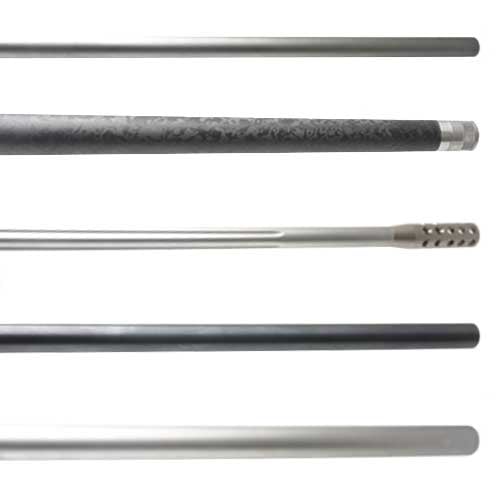
When it comes to barrel materials, the debate usually boils down to three contenders: chrome-moly. stainless steel and carbon fiber.

Chrome-Moly Barrels
- Advantages: Chrome-Moly barrels are valued for their durability and affordability, making them an excellent choice for shooters who require a barrel that can withstand rapid fire and extended shooting sessions without compromising performance.
- Ideal Use Cases: These barrels are particularly suited for dynamic shooting scenarios where the rifle is subjected to high volumes of fire. They're a popular option among competitive shooters and enthusiasts who demand a robust barrel that offers a good balance between cost and longevity.

Stainless Steel Barrels
- Advantages: Stainless Steel barrels are renowned for their superior accuracy and precision, which is why they are often the preferred choice for long-range precision shooting. Their construction allows for a longer lifespan even with less frequent cleaning, and they are designed to resist erosion effectively.
- Ideal Use Cases: Ideal for precision shooters and marksmen who engage in long-range shooting competitions or activities where accuracy is crucial. The slight increase in weight compared to Chrome-Moly barrels can also aid in stabilizing shots, enhancing overall shooting precision

Carbon Fiber Barrels
- Advantages: Carbon fiber barrels, significantly lighter than steel, are ideal for those who prioritize weight savings during long carries. Despite their lightness, they can improve accuracy and boast impressive durability and weather resistance. While typically more expensive, they offer potential benefits for specific shooting disciplines, but careful heat management is crucial.
- Ideal Use Cases: Carbon fiber barrels excel in scenarios requiring lightweight portability, making them ideal for backcountry hunters and long-distance trekkers. While long-range shooting and specific competitive disciplines can benefit from their weight savings and potential accuracy gains, careful consideration of heat management is important for these applications.
Barrel Treatments for Enhanced Performance
Improving a rifle barrel's functionality and longevity often involves specific treatments that enhance its properties. Here's a breakdown of two prominent treatments: Nitride Coating and Chrome Lining, each with distinct benefits and applications.
Nitride Coating
- Benefits: Nitride coating significantly increases a barrel's lifespan and enhances its resistance to corrosion. This treatment process involves diffusing nitrogen into the steel, creating a hard surface layer that protects the barrel from wear and environmental damage.
- Suitable for: This versatile treatment is applicable to both Chrome-Moly and Stainless Steel barrels. It's an excellent choice for shooters looking for a cost-effective way to prolong barrel life without compromising the firearm's accuracy and performance.
Chrome Lining
- Benefits: Chrome lining offers exceptional durability, especially under conditions of rapid fire where the barrel is subjected to extreme heat. This treatment involves applying a thin layer of chrome to the barrel's interior, providing a protective barrier that withstands the rigors of high-intensity shooting.
- Suitable for: It ensures reliability and durability in the most demanding situations.
Selecting the Right Barrel Length and Profile
Selecting the right barrel length and profile for your rifle involves balancing various factors such as ballistics, velocity, maneuverability, and weight. Here's a comprehensive look at how these aspects influence your rifle's performance and handling:
Barrel Length
Barrel length directly impacts a rifle's ballistics and velocity. Generally, longer barrels provide higher bullet velocities because the powder has more time to burn and generate gas pressure behind the bullet.
Longer isn't always better! While a longer barrel usually means more power, it can also make your gun unwieldy. Think about using your gun in tight spaces or brush - a shorter barrel might be more practical.
For example, while a longer barrel might optimize the performance of cartridges like the .300 Winchester Magnum, trying to achieve optimum performance from high-capacity cartridges in barrels shorter than 24 inches could be challenging due to the insufficient burn time for the powder.
It's also worth noting that every inch of barrel length can add or reduce about 25 fps of muzzle velocity, which might influence your decision based on your specific shooting goals and scenarios.
Barrel Profile
When it comes to barrel profile, you have several options, each affecting the rifle's performance and handling differently:
Bull barrels are heavy and maintain consistency in shooting by resisting heat and minimizing barrel whip, but their weight might not be ideal for all hunting situations.
Contour barrels offer a balance between weight and heat dissipation, making them versatile for various shooting applications.

Pencil barrels are lightweight and enhance maneuverability, which is beneficial for hunting in dense environments, although they tend to heat up quickly, potentially affecting accuracy over prolonged shooting sessions.

Fluted barrels feature grooves that reduce weight and increase surface area for better cooling, offering a compromise between the sturdiness of heavy barrels and the maneuverability of lighter ones.
It's crucial to consider the specific needs of your shooting application when selecting barrel length and profile.
Rifling: Enhancing Barrel Accuracy
Rifling is a key factor in enhancing the accuracy of a rifle barrel, with different methods offering unique benefits. Let's explore the three primary rifling techniques: Cut Rifling, Button Rifling, and Hammer Forging.
Button Rifling
Button rifling is a prevalent method where a hard, bullet-shaped button is pressed through the barrel, imprinting the rifling pattern. This method is known for its efficiency and consistency.
- Advantage: Button-rifled barrels are known for their uniform bore and groove dimensions, which contribute to consistent accuracy. The process also leaves a smooth finish inside the barrel, potentially reducing the need for extensive break-in periods.
- Ideal For: Shooters looking for a reliable and accurate barrel that won't break the bank. Whether you're into casual target shooting or hunting, a button-rifled barrel offers a good mix of performance and value.
Cut Rifling
Cut rifling, the traditional method of carving out grooves in the barrel one at a time, is favored for its precision.
- Advantage: The meticulous nature of cut rifling allows for custom twist rates and groove configurations, catering to those seeking tailor-made accuracy for specialized shooting disciplines or particular ammunition types.
- Ideal For: Precision shooters and enthusiasts who demand the utmost accuracy for competitions or long-range shooting. Cut-rifled barrels offer the customization and close tolerances that can give you that extra edge.
Hammer Forging
Hammer forging involves shaping the barrel around a mandrel under immense pressure, creating a dense and durable barrel.
- Advantage: The intense compression during hammer forging results in a robust barrel with a long lifespan. The process also ensures consistent rifling that contributes to reliable accuracy.
- Ideal For: Shooters looking for a durable barrel capable of withstanding heavy use. Hammer-forged barrels are excellent for high-volume shooters, tactical applications, or anyone who values longevity and reliability in their firearm.
Each rifling method brings its own set of benefits to the table, catering to different needs and preferences in the shooting community. Whether you prioritize precision or efficiency understanding the nuances of each rifling technique can guide you in selecting the optimal barrel for your rifle.
The Importance of Twist Rate
The twist rate of a rifle barrel is a critical factor in determining the stability of a bullet in flight, which in turn affects accuracy. A twist rate is expressed as a ratio, such as 1:10, meaning the bullet makes one complete rotation for every 10 inches it travels down the barre.
Recommendations Based on Rifle Use
When selecting a rifle barrel, it's crucial to consider the intended use of the firearm, as this will guide you in choosing the right barrel material, length, profile, and twist rate.
Long-Range Precision Shooting
For those dedicated to long-range precision shooting, the choice of barrel can significantly impact performance. High-quality materials like stainless steel, known for its superior accuracy, are often preferred. A longer barrel length, around 26 inches, is common among top shooters to maximize velocity and accuracy over distance.
Heavy or bull barrel profiles are favored for their stability and reduced vibration. A tighter twist rate is also essential to stabilize longer, heavier bullets typical in long-range shooting. Brands like Bartlein and Hawk Hill Custom, known for their precision barrels, are popular choices among top competitors in the Precision Rifle Series (PRS).
Hunting and Trekking
For hunters and outdoor enthusiasts who often trek through rugged terrains, lightweight and maneuverable barrels are key. Materials that offer a good balance between weight and durability, such as carbon fiber-wrapped barrels, can provide the rigidity needed for accuracy without the added weight.
Shorter barrel lengths, around 20-24 inches, can enhance maneuverability without significantly compromising velocity. Contour profiles like the Medium Palma or sporter contours offer a good balance, reducing weight while maintaining performance. A moderate twist rate that accommodates a versatile range of bullet weights would be ideal for various hunting scenarios.
Conclusion
Choosing the right barrel is more than just picking a pipe; it's about understanding the nuanced interplay between materials, treatments, manufacturing processes, and ballistic requirements. By aligning your barrel choice with your shooting aspirations, you're setting the stage for unparalleled accuracy and performance.
So, next time you're pondering a rifle upgrade, give the barrel the respect it deserves. After all, in the world of precision shooting, the right barrel isn't just a component; it's the heart of your rifle.





Service très rapide merci (Translated by Google) Very fast service, thank you.